


In recent weeks, questions around fire safety in buildings have become increasingly frequent, particularly regarding visible and enveloping materials such as ceilings.
In public buildings, these concerns are entirely legitimate. They highlight a fundamental reality: architectural quality, acoustic comfort and aesthetics must never come at the expense of people’s safety.
At Arketex, this requirement underpins all our developments. Fire safety is neither a secondary issue nor a communication argument. It is a technical, regulatory and ethical prerequisite.
Fire safety: a central issue in building design
In an architectural project, the ceiling plays a far greater role than one might assume.
It contributes to acoustics, visual comfort and the identity of a space. It is also a key factor in the overall behaviour of a building in the event of a fire.
This is why regulations impose strict requirements on the fire reaction of materials, particularly in public buildings. These standards are designed to limit flame spread, reduce smoke opacity and prevent the formation of flaming droplets — all of which can significantly worsen evacuation conditions.
The objective is clear: gain time, preserve visibility and secure evacuation routes for occupants and emergency services.

Euroclass classification: a European reference
The Euroclass system is now the European benchmark for assessing the fire reaction of construction and finishing materials.
It was introduced by the regulation of 21 November 2002 to harmonise standards across Europe.
Unlike older classification systems, Euroclass provides a detailed and comprehensive assessment of a material’s behaviour in the event of fire. It goes beyond combustibility alone and also takes into account two critical factors:
- the quantity and speed of smoke release
- the potential formation of flaming droplets or debris
This holistic approach allows for a more realistic evaluation of fire risks.
What does the Euroclass B-s1,d0 rating mean?
Arketex® fabrics are fireproof and classified B-s1,d0, this classification is mandatory for textile materials used in ceilings in public access buildings.Here is how to interpret it.
Decryption.
B
The letter B indicates that the material is low combustible.
By comparison, a material classified A is non-combustible, while a material classified E is highly flammable and promotes flame spread. Class B represents an excellent level of performance for flexible and textile materials.
s1
The “s” stands for smoke.
A s1 rating means that the material releases very little smoke during combustion, both in terms of quantity and speed. This is essential, as smoke is one of the main hazards in a fire, reducing visibility and making evacuation more difficult.
d0
The “d” refers to drop, meaning flaming droplets or debris.
A d0 rating certifies that no burning droplets or debris are produced during combustion, significantly limiting the risk of secondary fire spread.
In summary, a material classified B-s1,d0 is low combustible, produces very little smoke and does not generate flaming elements that could fall.
Correspondence with the French M1 standard
The Euroclass system has equivalences with former French fire classifications.
A material rated B-s1,d0 generally corresponds to a M1 classification, which is recognised as offering a high level of fire performance.
This equivalence facilitates discussions with control authorities, safety commissions and project owners, while ensuring a high standard of compliance.
Ceilings designed for public buildings
All Arketex ceilings are designed to meet the specific constraints of public buildings.
They have undergone comprehensive fire testing and are supplied with official certificates attesting to their compliance.
Beyond material classification, our solutions seamlessly integrate all essential fire safety systems:
sprinklers, lighting, smoke extraction hatches and maintenance access points.
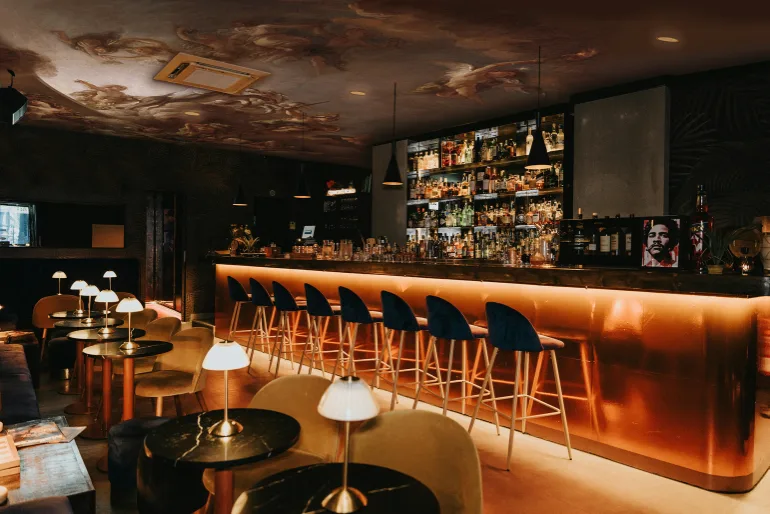
This integration is achieved without compromising acoustic performance or aesthetic quality, including in the case of printed textile ceilings.
Safety, comfort and aesthetics: a holistic approach
Improving a space’s acoustics, strengthening its visual identity or creating a distinctive atmosphere should never put occupants’ safety at risk.
This is the holistic vision we uphold at Arketex: designing ceilings that fully contribute to comfort and architectural expression, while strictly complying with current regulations.
Because a successful project is, above all, a safe one.
And because protecting people will always remain the essential priority.
Euroclass B-s1,d0 classification – Simplified reading
| Criteria | Pictogram | Meaning | What this means in practical terms |
|---|---|---|---|
| Reaction to fire | 🔥 | Class B | The material is only slightly combustible. It contributes very little to the development of a fire, unlike unclassified or highly flammable materials. |
| Smoke | 💨 | s1 (Smoke) | Smoke is very limited, both in quantity and speed. Visibility is better preserved, which facilitates the evacuation of occupants. |
| Droplets / debris | 🚫⬇️ | d0 (Drop) | No drips or burning debris are released during combustion. This greatly reduces the risk of secondary fire spread. |